> ## Documentation Index
> Fetch the complete documentation index at: https://docs.consensus.app/llms.txt
> Use this file to discover all available pages before exploring further.
# Ask a paper
> Attach a paper to the search bar and ask about its methods, sample, findings, and limitations, so you understand a study before you cite it.
Once you've found an important paper, you need to understand it: who was studied, what was done, what was found, and what the weaknesses are. Consensus can read the paper with you and answer questions about it, pointing to the exact passage for each answer.
## Step 1: Attach the paper
There are three ways:
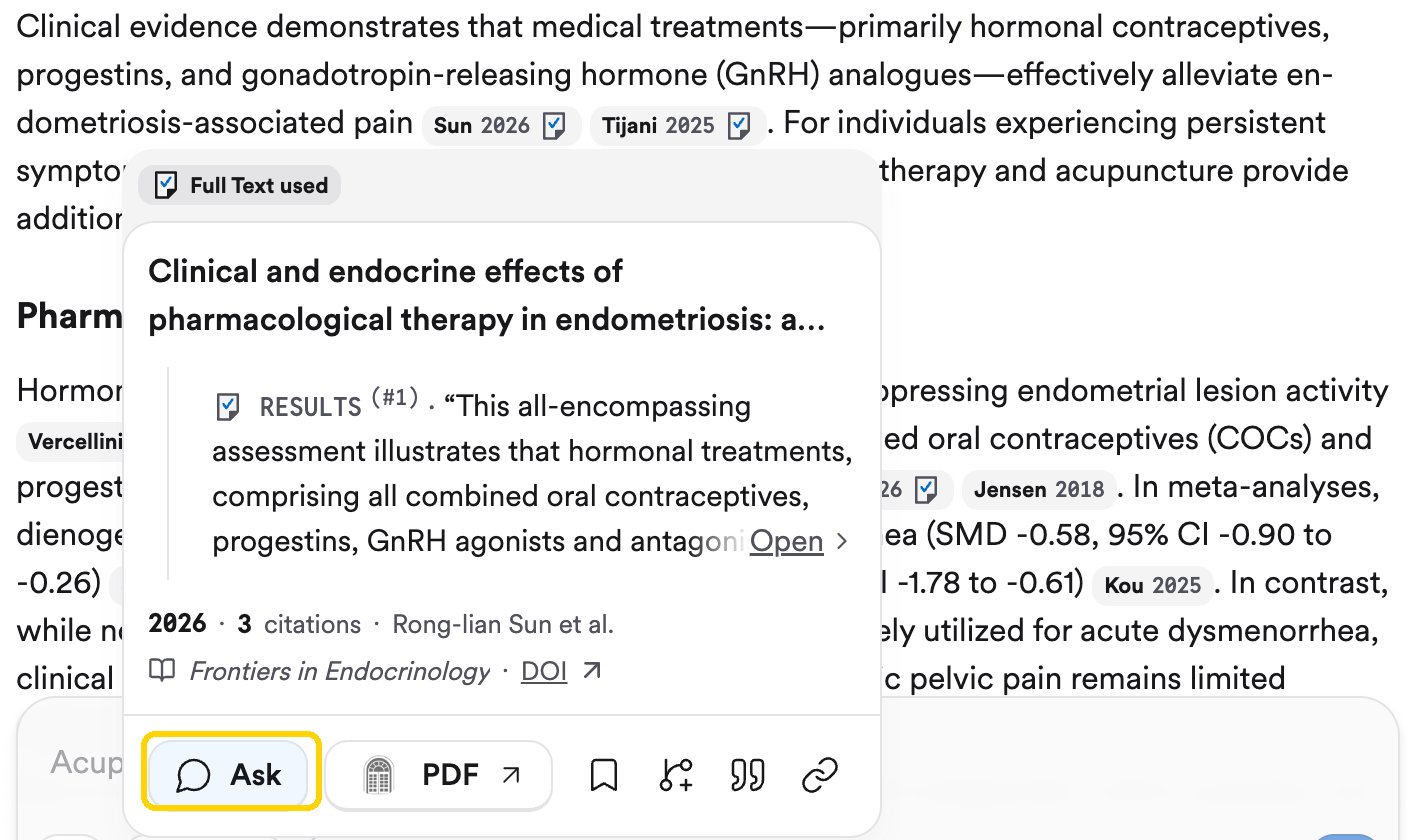
* **From a citation.** Hover a citation in the answer and click **Ask**.
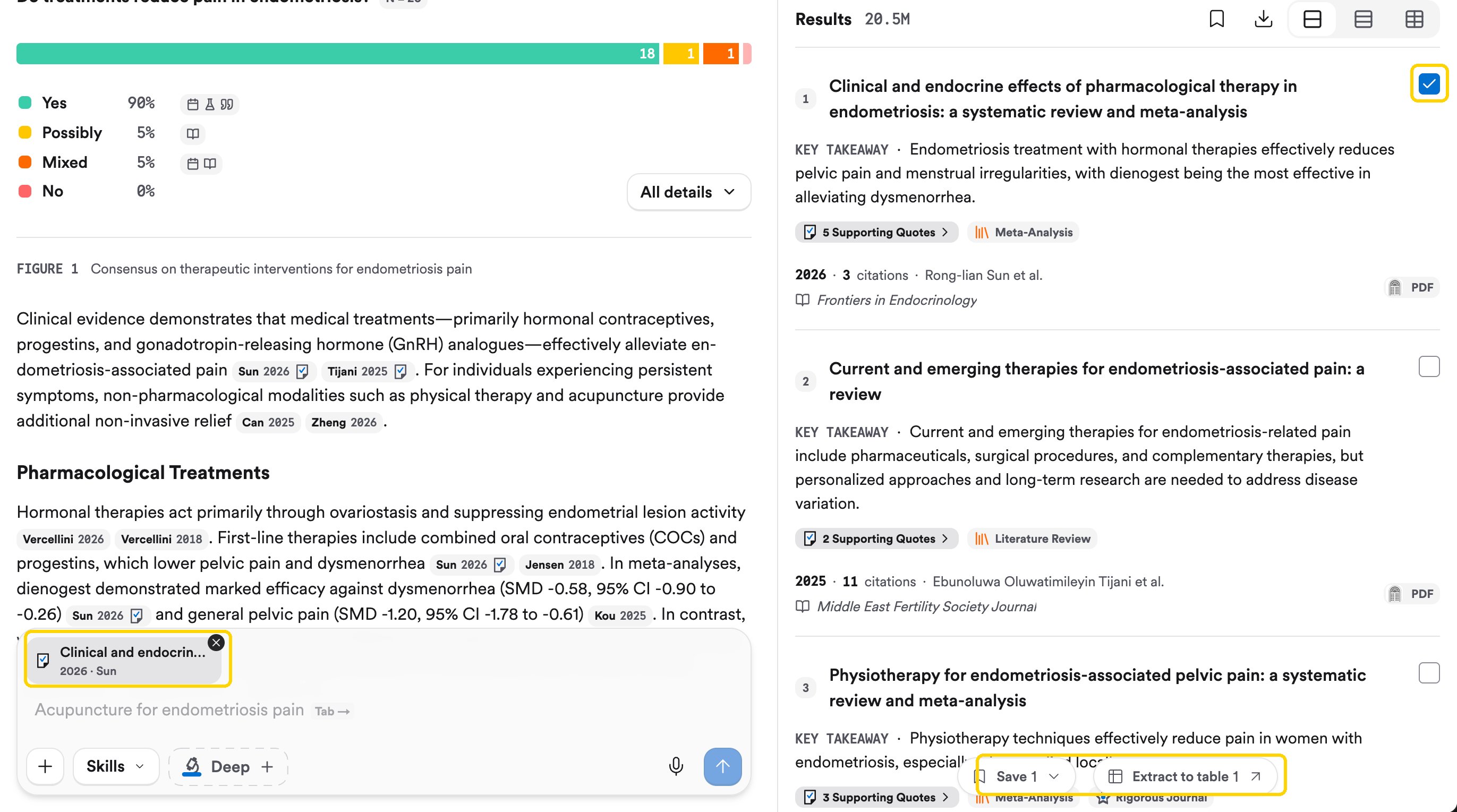
* **From your results.** Tick the box next to a paper in the References panel.
* **From the search bar.** Click **+**, then **Attach papers or collections** to pick papers from your Library, or **Upload papers** to add a PDF.
 The paper appears above the search bar and is ticked in the References panel. You can attach several papers at once to compare them.
 ## Step 2: Ask about it
Questions that work for almost any study:
```text theme={null}
What question was this study trying to answer, and why?
```
```text theme={null}
Who was studied, how many people, and for how long?
```
```text theme={null}
What was the main finding, and how big was the effect?
```
```text theme={null}
What are the main limitations of this study, according to the authors?
```
```text theme={null}
What do the authors say future research should look at?
```
## Step 3: Check the answer against the paper
Hover a citation in the answer to see the quote it came from. To read it in context, click the paper's **Supporting Quotes**, open the **Attachment** tab to see the PDF, and pick a quote from the menu at the bottom to highlight it. Read the surrounding paragraph yourself. This is the habit that makes AI a learning tool rather than a shortcut.
Clicking a paper's **Supporting Quotes** opens a paper panel. Its **Snapshot** tab pulls out the population, sample size, methods, and results at a glance, and its **Evidence** tab lists every quote the answer used.
## Try it on your topic
Attach one of the key papers from [Read a Consensus answer](/learn/read-a-consensus-answer) and ask the five questions above.
**You should now have:** a 3-line summary of one key paper in your own words: what they did, what they found, and the main limitation.
Answers are best when Consensus has the full text. See [Read the full paper](/get-started/full-text-access) for where full text comes from, and how to connect your university library for links to papers it subscribes to.
This documentation is built and hosted on [Mintlify](https://mintlify.com), a developer documentation platform.
## Step 2: Ask about it
Questions that work for almost any study:
```text theme={null}
What question was this study trying to answer, and why?
```
```text theme={null}
Who was studied, how many people, and for how long?
```
```text theme={null}
What was the main finding, and how big was the effect?
```
```text theme={null}
What are the main limitations of this study, according to the authors?
```
```text theme={null}
What do the authors say future research should look at?
```
## Step 3: Check the answer against the paper
Hover a citation in the answer to see the quote it came from. To read it in context, click the paper's **Supporting Quotes**, open the **Attachment** tab to see the PDF, and pick a quote from the menu at the bottom to highlight it. Read the surrounding paragraph yourself. This is the habit that makes AI a learning tool rather than a shortcut.
Clicking a paper's **Supporting Quotes** opens a paper panel. Its **Snapshot** tab pulls out the population, sample size, methods, and results at a glance, and its **Evidence** tab lists every quote the answer used.
## Try it on your topic
Attach one of the key papers from [Read a Consensus answer](/learn/read-a-consensus-answer) and ask the five questions above.
**You should now have:** a 3-line summary of one key paper in your own words: what they did, what they found, and the main limitation.
Answers are best when Consensus has the full text. See [Read the full paper](/get-started/full-text-access) for where full text comes from, and how to connect your university library for links to papers it subscribes to.
This documentation is built and hosted on [Mintlify](https://mintlify.com), a developer documentation platform.