
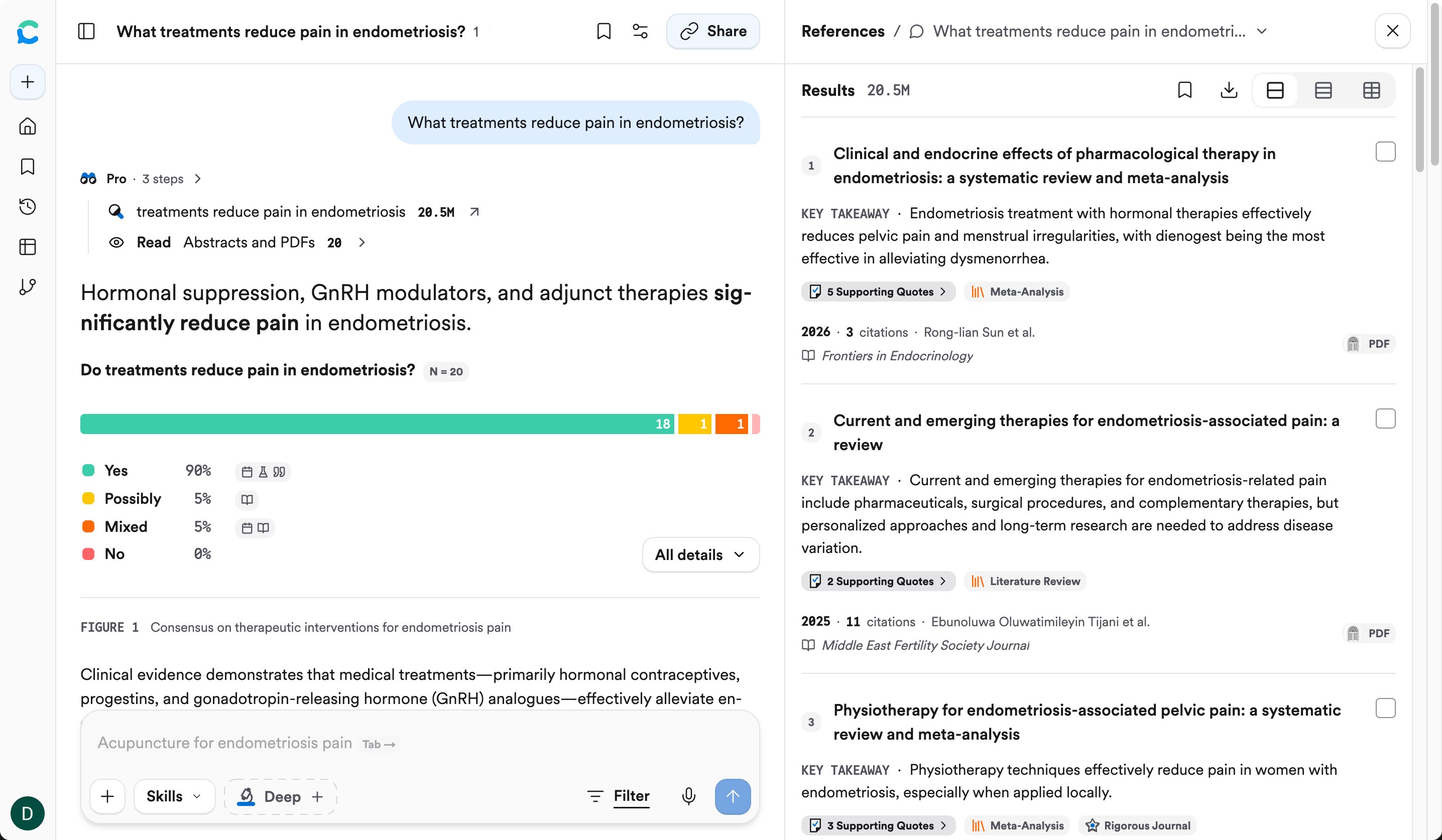
The answer on the left, the References panel on the right.
1. The search trace
The lines at the top of the answer (for example, Pro · 3 steps) show what Consensus actually did: what it searched for, how many papers matched, and how many it read. Click a step to see more.
One search that matched 20.5M papers, then 20 papers read from their abstracts and PDFs.
2. The answer
The answer summarizes what the research says. Look for:- Citations. The grey tags in the text (like
Sun 2026) link each statement to a paper. A small document icon with a tick next to a citation means Consensus read the full paper; without it, Consensus read only the abstract. Hover any citation to see the exact quote; see Check a claim against the paper. - Hedged language. Words like “mixed”, “limited”, or “some studies” are the answer telling you the evidence isn’t settled. Don’t skip past them.
- Visuals, depending on your question: tables and figures comparing studies, a Claims & Evidence table rating how well each claim is supported, a Research Gaps map, or a timeline.
The Consensus Meter
For a yes/no question, the answer opens with the Consensus Meter: how many of the papers lean Yes, Possibly, Mixed, or No. N is the number of papers counted.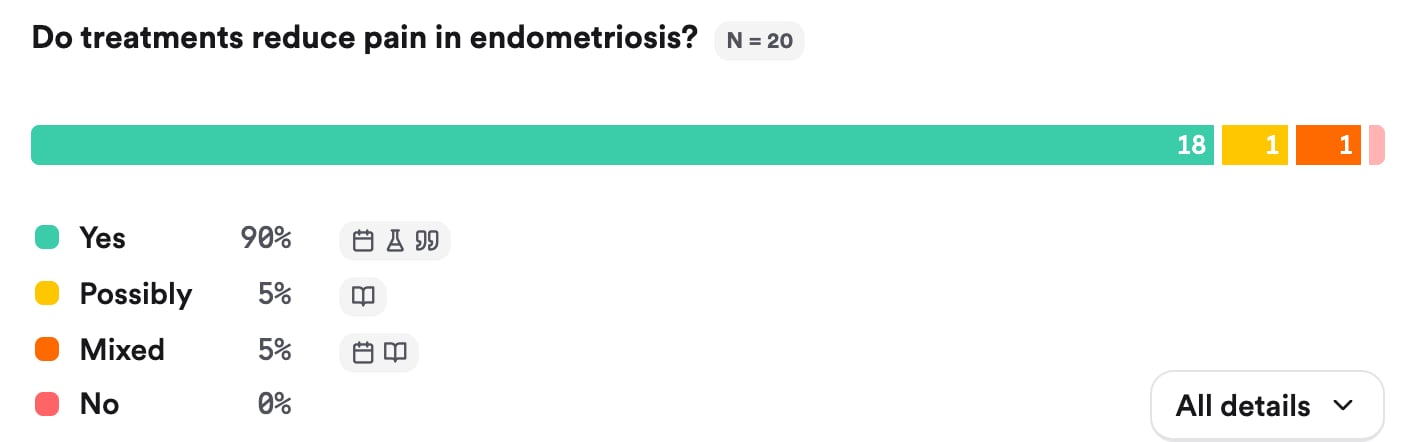
18 of 20 papers say yes, treatments reduce endometriosis pain.
3. The References panel
Each paper in the panel shows: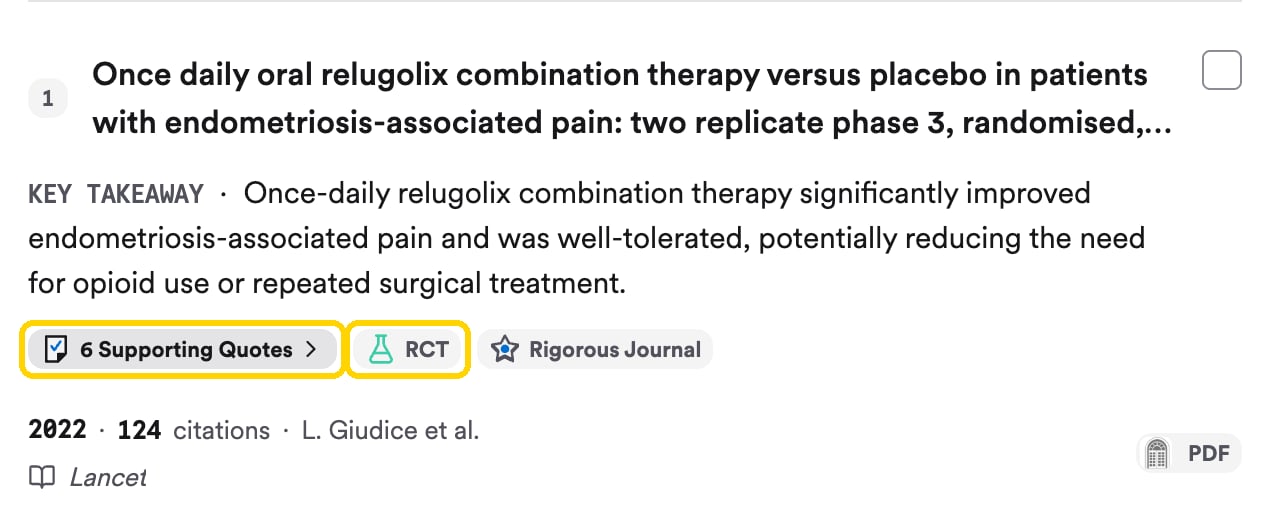
The supporting quotes and the study type are the two things to check first.
Switch between the default list, a compact list, and a Table view with the buttons at the top of the panel. The table view adds columns like the paper’s answer to your question and the population studied, so you can compare papers at a glance.
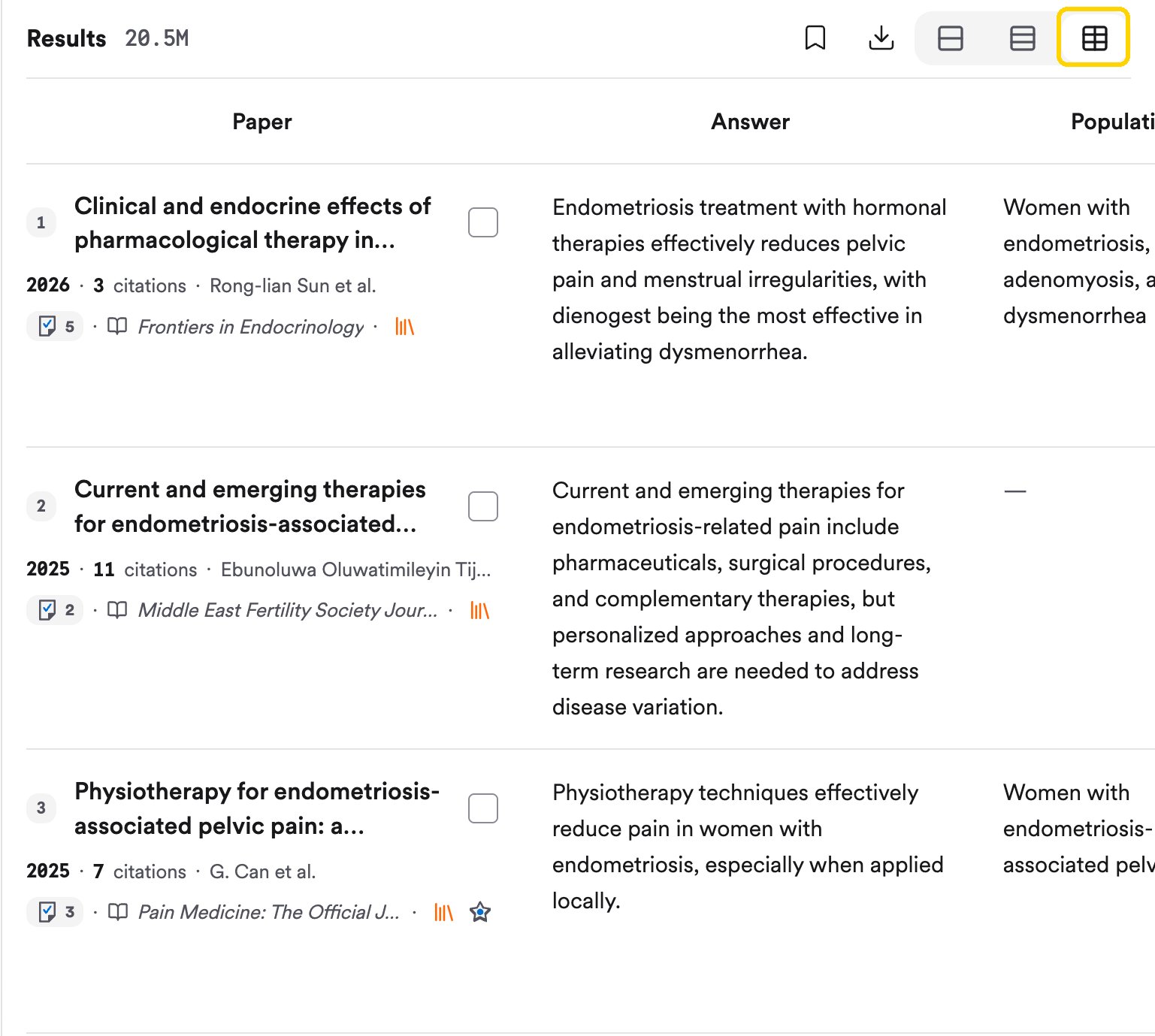
Table view: one row per paper, with columns you can compare.
Study types, in plain English
Consensus is able to extract a number of different study types from papers, which you can use in filters or see on the References tab. To search for only certain study types, see Filter for strong, recent studies.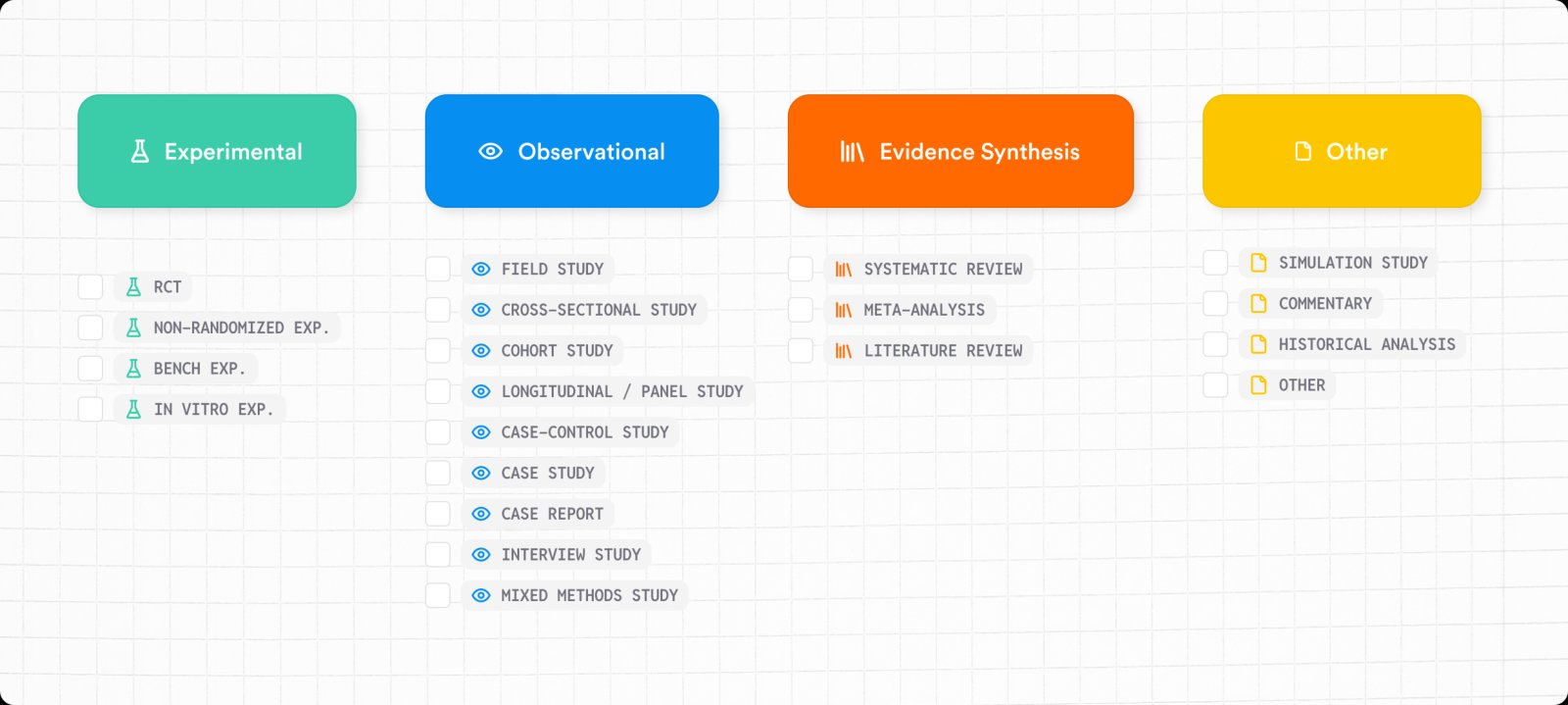
- Systematic review / meta-analysis: combines many studies on the same question. A great place to start.
- RCT (randomized controlled trial): people are randomly assigned to a treatment or a comparison group. The best single study for cause and effect.
- Cohort, case-control, cross-sectional: observational studies that track or compare groups without assigning treatments. Useful, but they show links, not proof of cause.
- Case study / case report: one person or a small group. Good for rare situations and new ideas.
Try it on your topic
Run a search on your topic, expand the search trace, and look through the References panel.You should now have: 3 papers you’d read first, and a reason for each. For example: “the most recent meta-analysis”, “the most cited RCT”, “the only study in my population”.