One trusted paper is enough to find the literature around it. Three signals help: papers that look similar, papers that cite it, and papers it cites. This tutorial uses Cryan & Dinan (2012), Mind-altering microorganisms, on the gut microbiome and depression.
You’ll learn how to:
- Find semantically similar papers from a single seed
- Build a research timeline from the collected set
- Generate a research gaps matrix showing what topics and populations are missing
Step 1: Find the seed and its neighbors
Step 2: Visualize coverage and gaps
Step 3: Fill the gaps
Save papers as you find them
Click the bookmark on any paper to save it, or the bookmark at the top of the page to save the whole thread. Pick an existing Collection or create a new one. Collections can be nested by choosing a parent under Create in.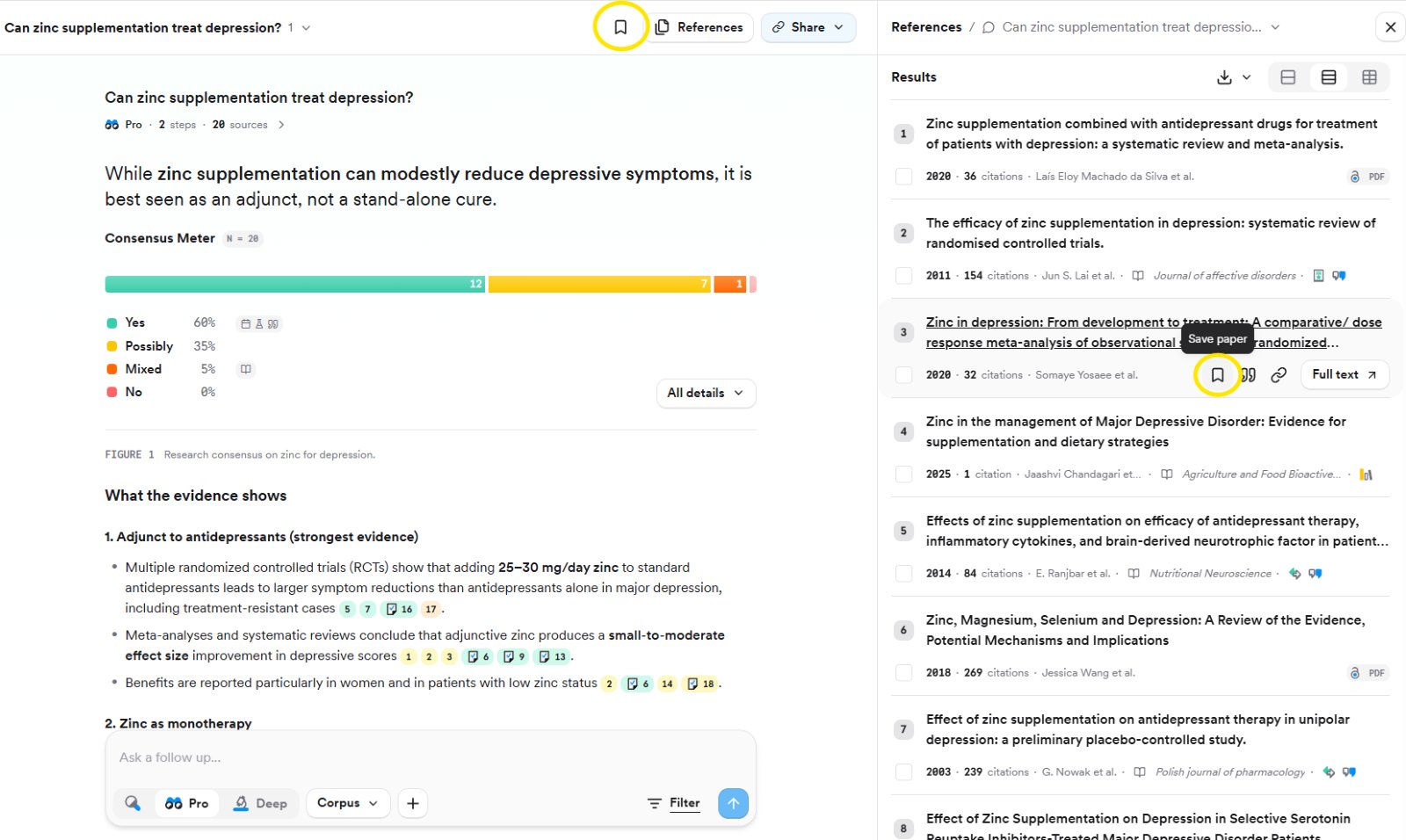
The bookmark on a paper and at the top of the thread.
Review every paper the thread used
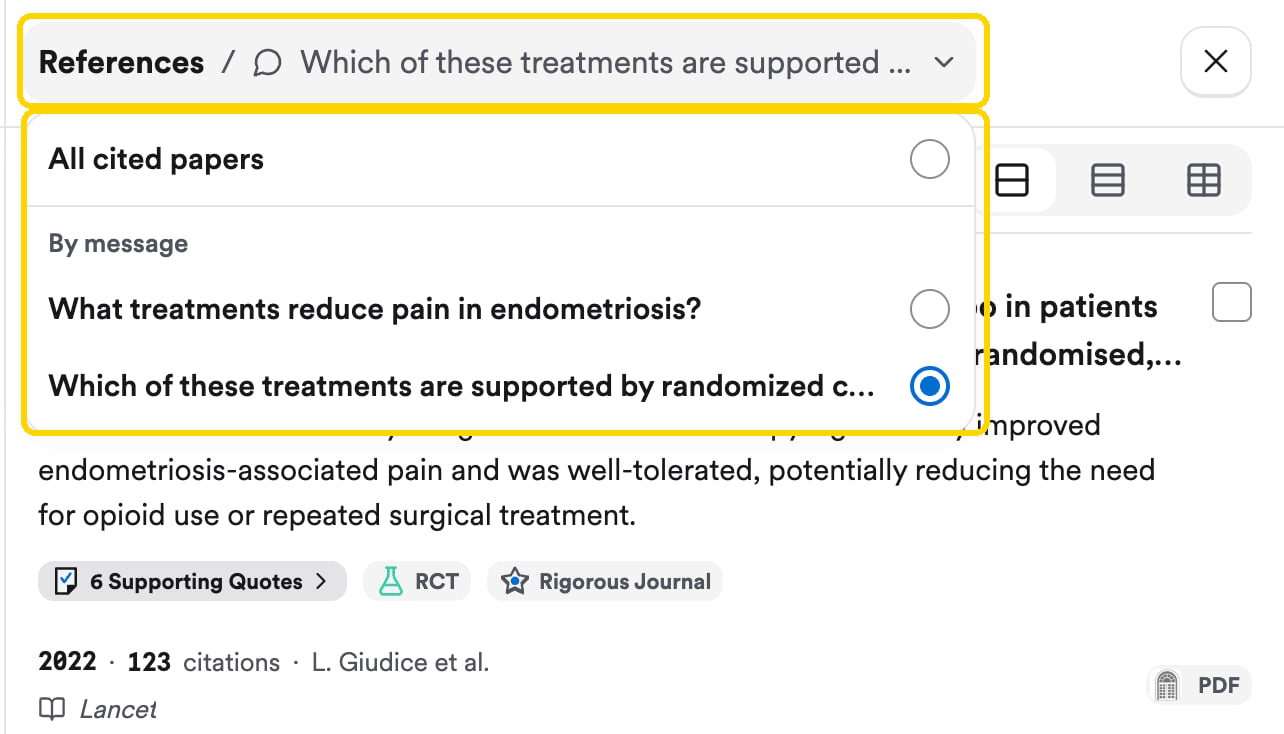
Click References in the top right. The dropdown switches between All cited papers (everything across the thread) and By message (papers behind one specific search). Tick papers here to save several at once or attach them to a follow-up.