Entering a fast-moving field, you need to know what was foundational, what changed it, and where it stands now. This tutorial maps CRISPR gene editing from early work to clinical use.
You’ll learn how to:
- Surface early foundational work in any field
- Identify the breakthroughs that shifted the field
- Generate a recent-only summary of what changed in the last 3 years
- Read the full reference list in condensed or table view
Step 1: Ask for foundations and breakthroughs
Step 2: Ask what changed recently
Browse the full reference list
The answer cites the papers that best support each claim, but the thread holds more. Click References in the top right and use the dropdown to see All cited papers or the papers By message. Switch between Default (with key takeaways), Compact, and Table views with the buttons above the list.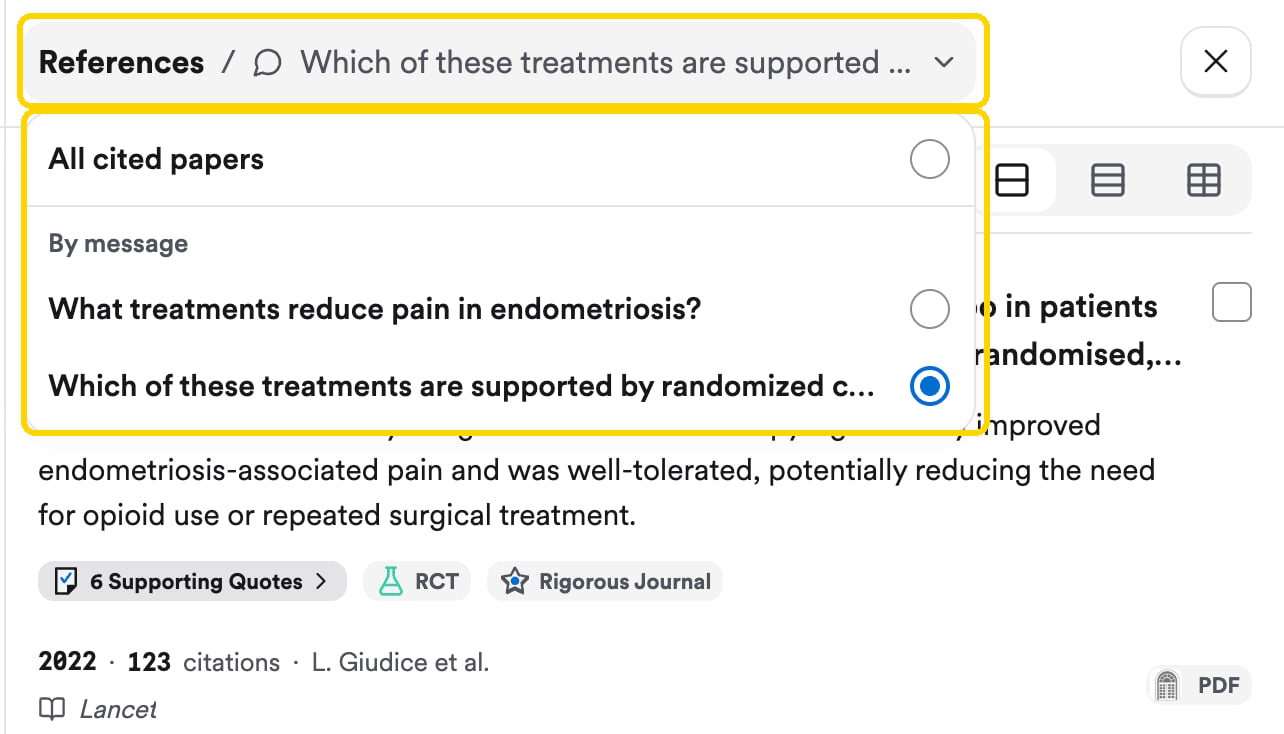
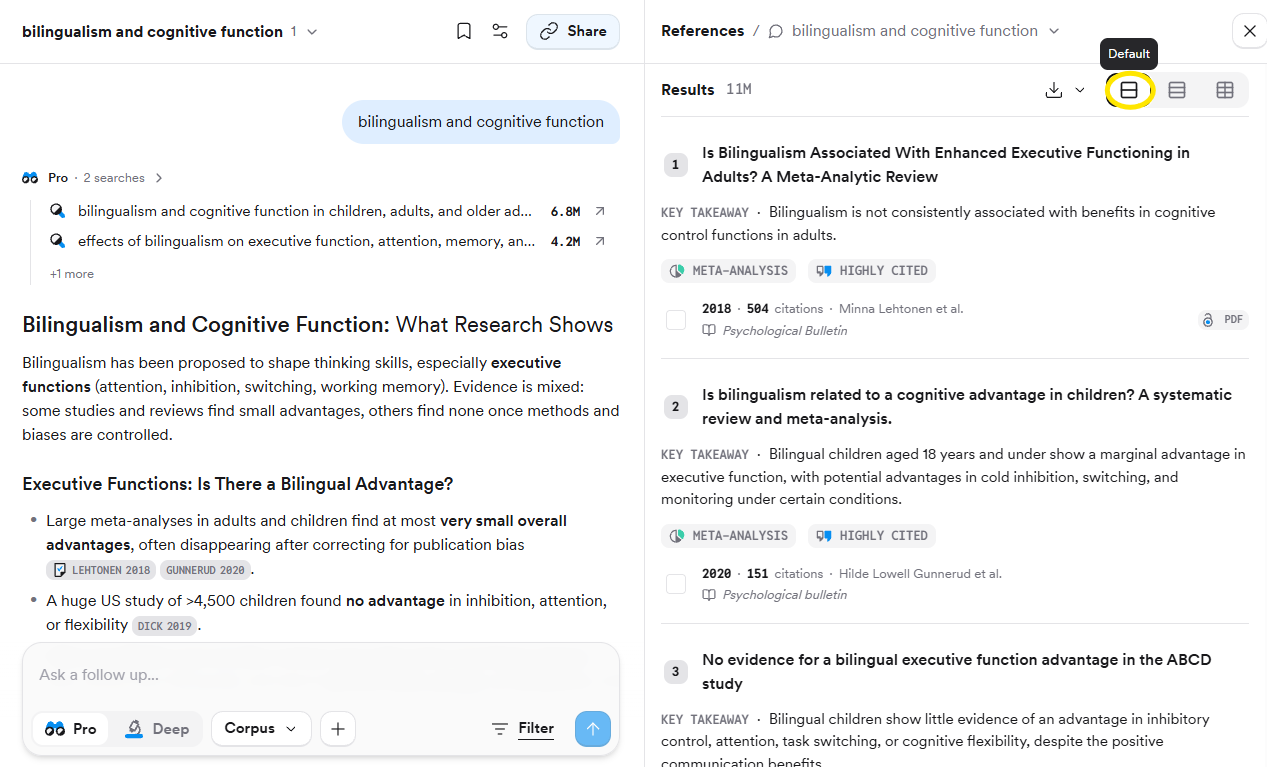
Default view shows a key takeaway under each paper; Compact hides it so more papers fit on screen.
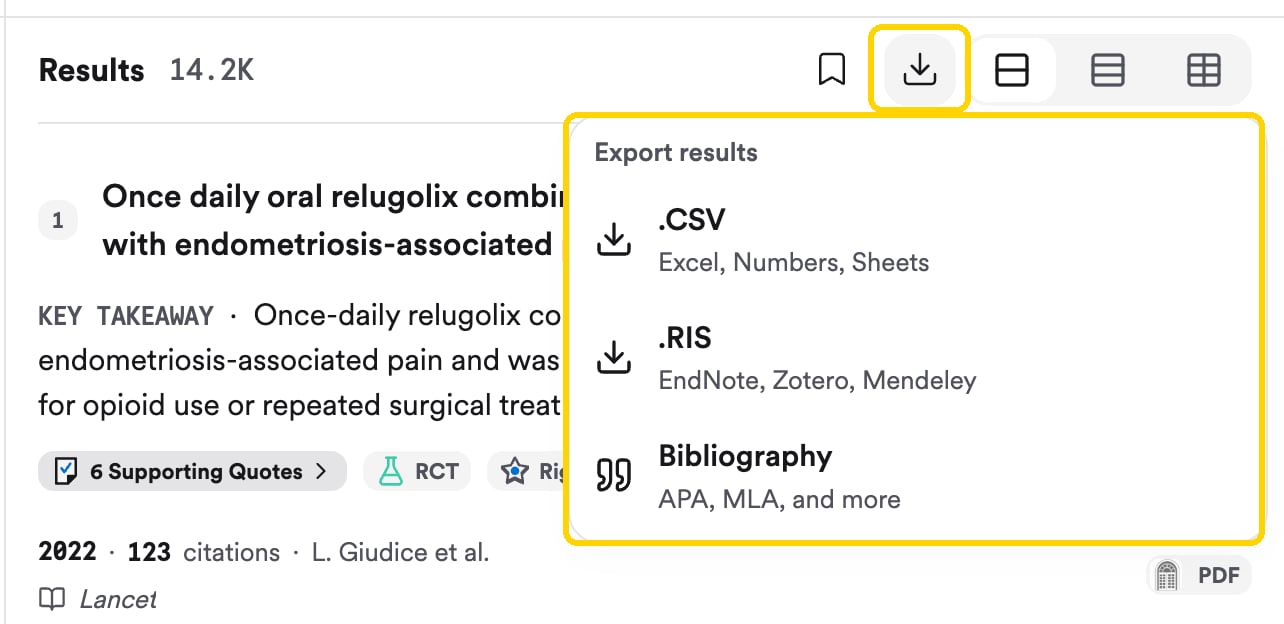
Export the reading list
Click the download arrow at the top of the results to export CSV, RIS for your reference manager, or a formatted Bibliography (APA, MLA, Chicago, Harvard, BibTeX, AMA/Numeric).