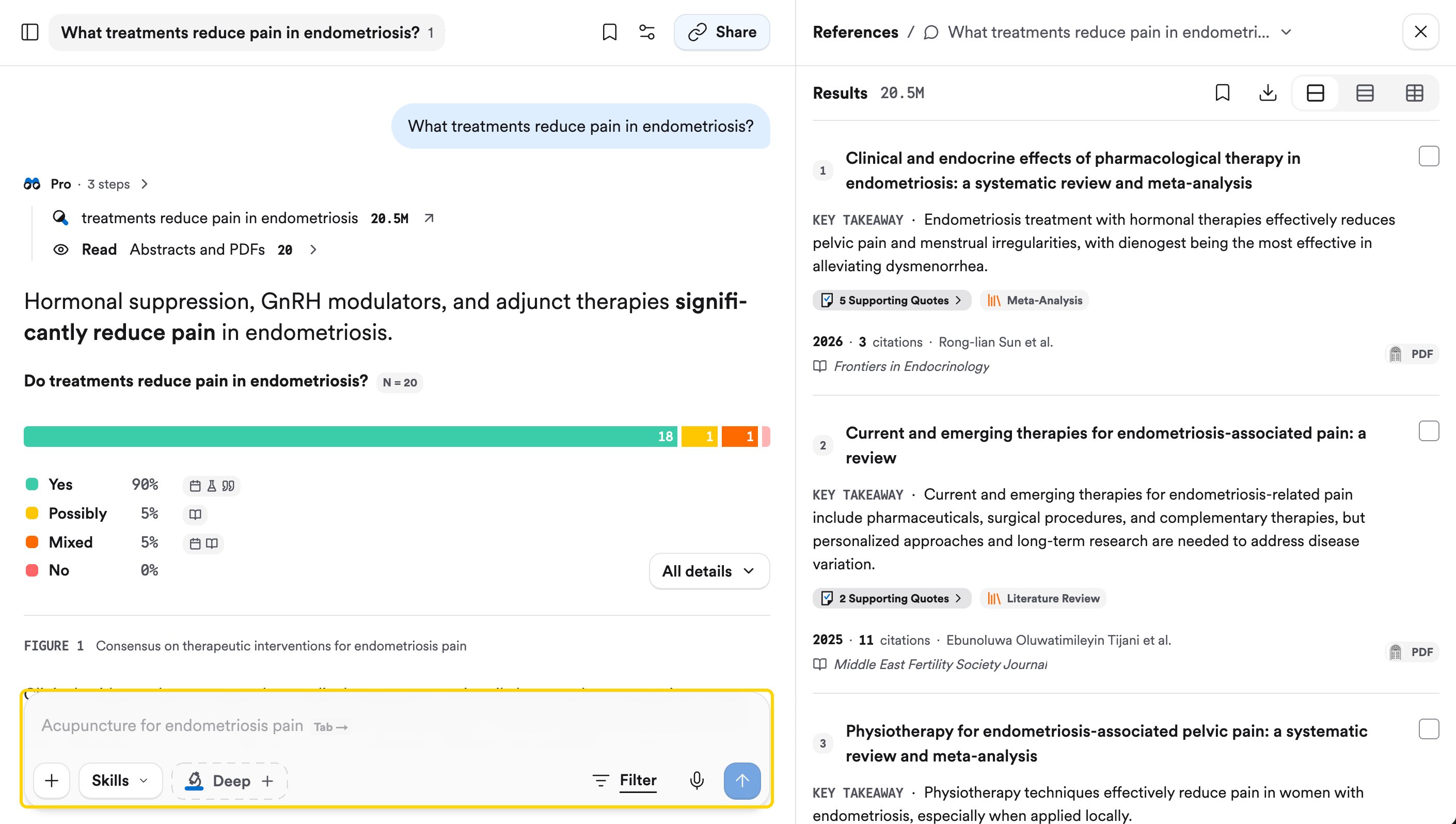
You don’t need to read every new paper. You need to know what’s new, organized by approach, and which approaches actually have evidence behind them. The example: techniques for reducing hallucinations in large language models since 2024.
You’ll learn how to:
- Run a recency-filtered search with results grouped by approach
- Rank approaches by empirical support across studies
- Drill into the strongest papers and jump straight to the passage in the PDF
Step 1: Recent evidence, grouped by approach
Consensus includes preprints by default, which keeps fast-moving fields current. Toggle them off in the filters if you only want peer-reviewed work.
Step 2: Rank the approaches
Step 3: Compare specific papers
Open References, tick three papers you want to go deeper on, and ask:Turn preprints off (or leave them on)
Preprints keep fast-moving fields current but haven’t been peer reviewed. They’re labeled in results. To exclude them, open Filter and switch on Exclude preprints under General. The same panel has Open access, which limits results to papers with viewable full text.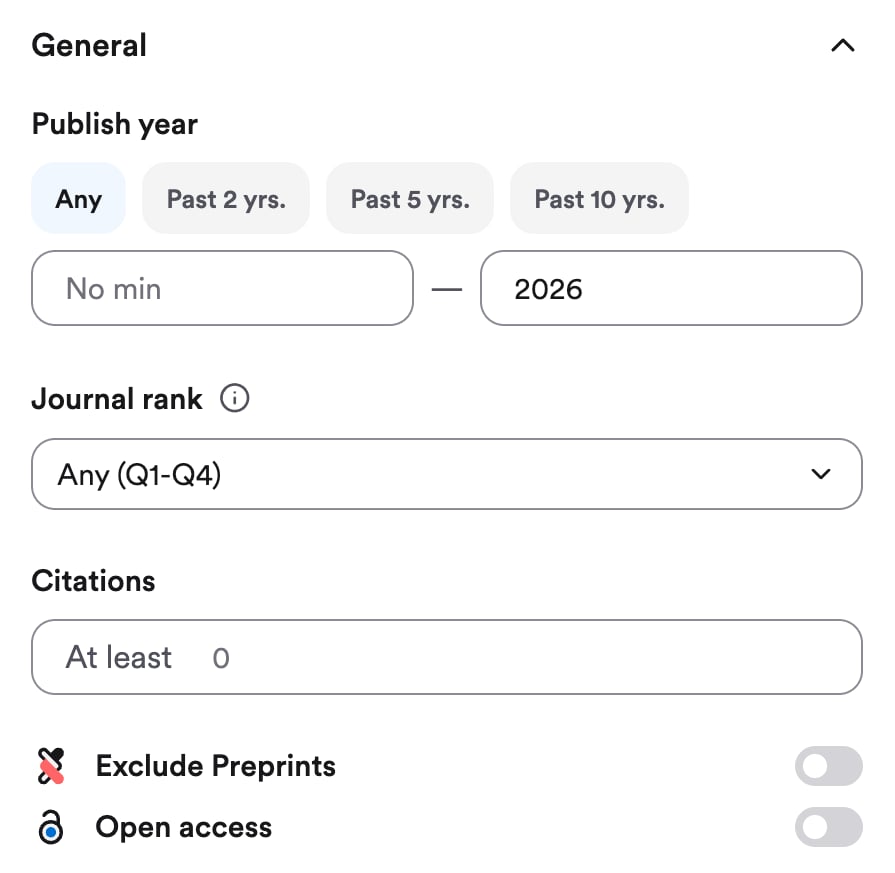
Attach papers directly from the results
Tick the boxes next to papers in the References list, then type your question in the search bar at the bottom. Only the attached papers are used, read in full where available.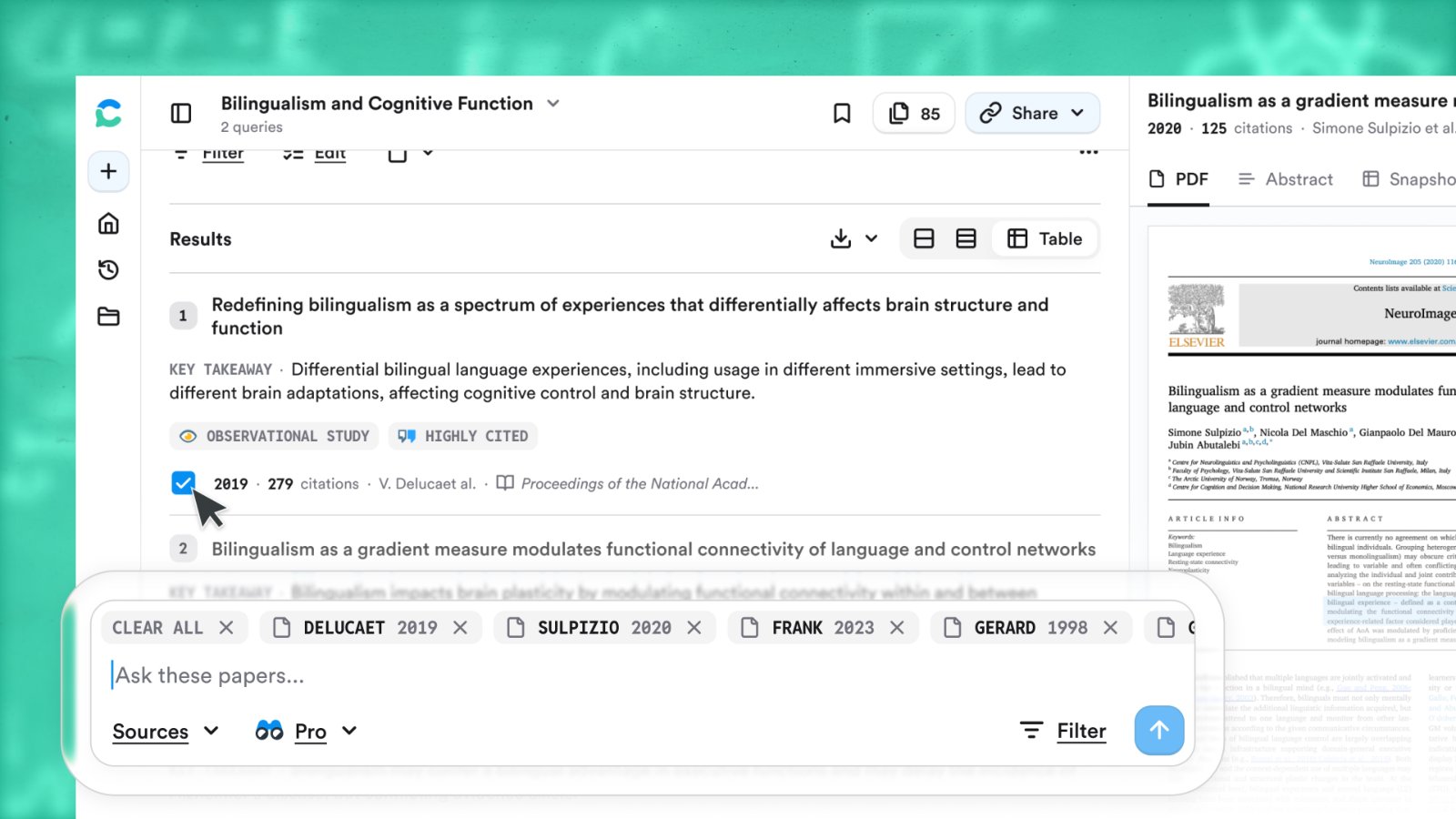
Follow-ups keep the thread’s context
Every follow-up in Ask a follow up… builds on the previous searches, so “which approach has the most evidence?” works without restating the topic. Follow-ups are available in Pro and Deep modes. To edit your first search instead, click Filter under the answer, adjust, and choose Apply and resend.